Many processes, particularly beverages, require some form of filtration to clarify the product. Normally, filtration proceeds from coarse filtration by means of separators, decanters, or settling tanks to a final polishing by diatomaceous earth (DE) or other body feed media filters.
|
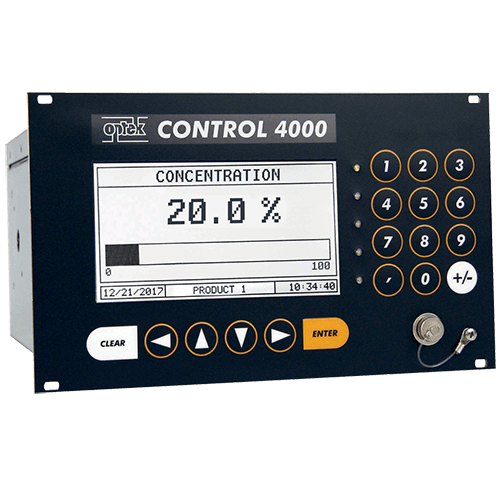
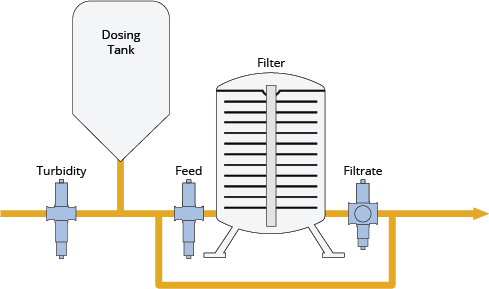
By installing a turbidimeter or colorimeter at the start of the filtration process and between each filtering step, the flow can be stopped, recirculated or switched to an alternate filter if product turbidity or color reaches an unacceptable level.
|
 |
Diatomaceous Earth (DE) Filtration Control & Monitoring Benefits |
- Extended Filter Runs
- Real-time Filter Control
- Reduced Precoating Time
- Optimized Use of Filter Aids
- Consistent Product Quality
- Immediate Break / Upset Detection
- Reduced Down Cylcles
- Increase Filtration Capacity
- Reduced Product Losses
- Optimized Processes
|
Photometric sensors can also monitor and control DE dosing to ensure uniform precoat and controlled body feed. This reduces filter media usage and extends the filter run by dosing only the amount of media necessary for effective filtration. Excessive amounts of filter media build up in the filter, reduce the effective filtration time, and increase product losses and down cycles.
|
Using inline control, you can greatly reduce the risk of equipment failure or failure of an operator to identify a problem, avoiding costly refiltering, lost time, or poor quality finished product. optek photometry will ensure that proper purity is achieved before transferring the product to the next process stage.
|
| Filtrate Monitoring |
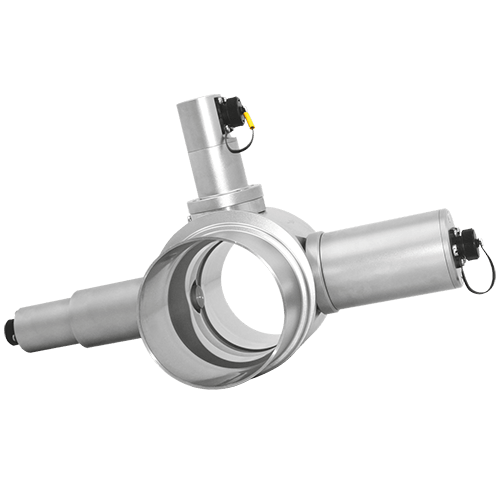
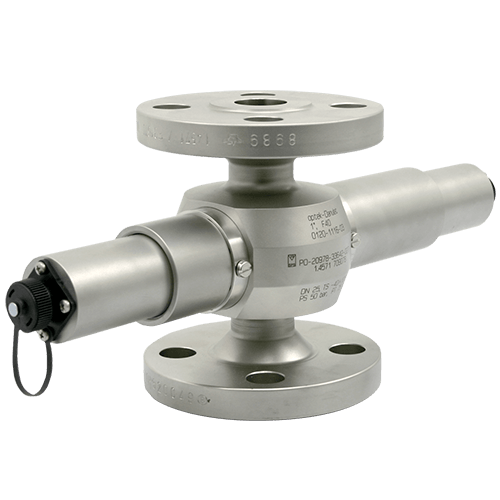
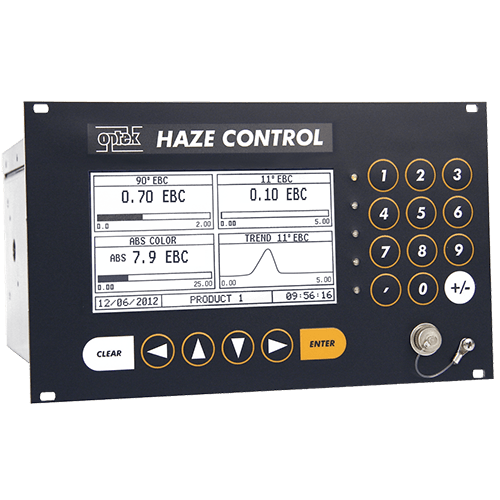
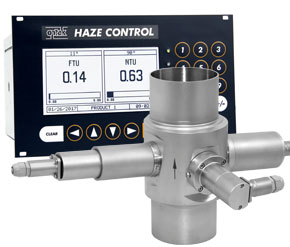
For final product clarification, it is often necessary to detect and monitor turbidity on the filter outlet. This will detect suspended solids and/or colloidal particles in the product. An optek TF16 or DTF16 scattered light turbidity meter precisely monitors very low concentrations of suspended solids (0 - 0.5 to 0 - 500 PPM) to ensure utmost purity.
|
With an optek TF16 or DTF16 turbidity meter on the filtrate stream, the filtrate can be automatically diverted to recirculate until the product clarity is improved to an acceptable level. This ensures optimized product quality and improved filtration performance while greatly reducing or eliminating lab analyses, visual inspection and potential problems downstream.
|
| Optimizing Precoat |
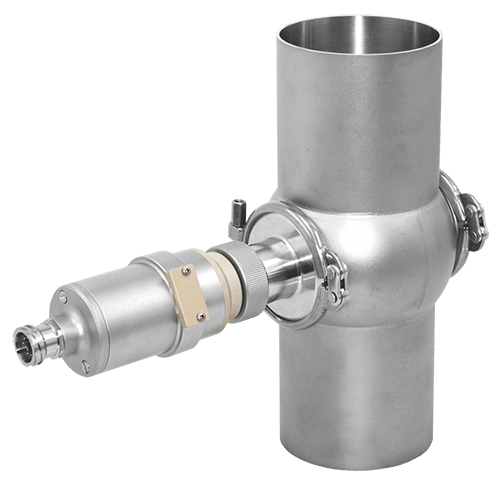
In addition to filtrate monitors, many large-scale processes implement a NIR absorption sensor on the precoat side of the filter. Because the inline NIR based turbidimeter measures total solids in real time, DE body feed can be precisely controlled by need rather than flow rate.
|
Continuous monitoring of filter aid addition allows accurate control of precoat concentration, to ensure proper cake thickness and uniformity. This maximizes the use of filter aids while extending filter runs. As the precoat is deposited, the precoating filtrate clears up gradually. The moment the sensor detects that the filtrate has cleared entirely, the transmitter signals the filter controller to switch over from precoating to filtering operation.
|
| Feed Monitoring |
An optek NIR based turbidimeter installed at the inlet to the filter can precisely monitor the filter feed quality and indicate when the incoming turbidity level is in danger of “blinding” the filter. This "blinding" can be caused by heavy solids carryover from storage tanks or pre-filtration failure.
|
Upon reaching the user-defined high turbidity threshold, the filter can be switched to a recycle mode, incoming product diverted to a decant tank, centrifugal separator or post filtered. This will prevent filter “blinding” and extend filter runs.
|
| DE Filtration Control & Monitoring Summary |
optek inline turbidimeters are able to precisely monitor extremely low concentrations of suspended solids. optek turbidimeters installed directly inline can control filter performance and detect filter upsets or breaks. They can also greatly reduce or eliminate the amount of sampling and lab analysis performed for finish turbidity.
|
An excellent tool for process control quality assurance and quality control, an optek process photometer in your filtering system is the best possible assurance that no poorly filtered product will ever pass through your filtration system.
|